
ChinaMoneypro UAV: Advanced Unmanned Platforms and Integrated Aerial Technology
Unmanned aerial vehicle technology is developing rapidly as businesses, researchers, and specialized industries look for more capable solutions for aerial observation, data collection, inspection, surveying, and other applications. Modern UAV systems are no longer limited to an aircraft and remote controller. They can incorporate propulsion systems, stabilized payloads, radar, sensing equipment, data links, and sophisticated communication technologies within one connected platform.
In this evolving environment, integrated engineering has become an important part of UAV development. ChinaMoneypro UAV is a national-level high-tech enterprise focused on the research, development, and manufacturing of advanced unmanned platforms and integrated sensing-communication solutions. With its origins in a prestigious state-owned research institute, the company brings research and engineering experience to a broad UAV technology portfolio.
A Complete Approach to UAV Technology
A successful unmanned platform depends on the interaction of many individual technologies. The aircraft provides the structural foundation, while the engine and propulsion system support flight operations. Sensors can collect information, gimbals can stabilize compatible payloads, and radar can provide additional sensing capabilities. Communication technologies and data links then connect the airborne platform with supporting systems.
Instead of treating these components as isolated products, a full-stack approach considers their relationship within the complete UAV architecture. This can help developers evaluate technical requirements from the beginning and select suitable components according to the intended application.
Multiple Technologies Within One Ecosystem
The technology portfolio covers complete UAV systems, engines, gimbals, radar, data links, and communication technologies. Having these capabilities within one development environment creates opportunities for more coordinated system planning and engineering.
Research Heritage and Engineering Expertise
The company's transformation from a prestigious state-owned research institute is an important part of its technology background. Its development is built around research and engineering capabilities that can be applied to the continuing evolution of unmanned aviation.
UAV engineering requires knowledge across multiple disciplines. Aircraft structures, propulsion, electronics, sensing, communications, payload integration, and control technologies must work together to create a functional platform. A research-oriented development process can provide a foundation for addressing these interconnected technical requirements.
Integrated Sensing for Modern UAV Applications
Sensing is one of the most important capabilities of many unmanned platforms. Depending on the mission, UAVs may be configured with different sensors and payloads designed to collect information from the air. The aircraft must be capable of supporting the payload while maintaining appropriate flight characteristics.
Integrated sensing solutions allow developers to consider the payload alongside the platform, propulsion, stabilization, power, and communication requirements. This approach can be useful when creating specialized UAV configurations instead of relying exclusively on standard aircraft designs.
Gimbal Systems for Payload Stabilization
Gimbals can provide stabilization for compatible imaging and sensing equipment. During flight, aircraft movement can affect the orientation of a payload, making stabilization an important consideration for applications that depend on consistent observation.
Integrating gimbal technology with the wider UAV system allows the payload to be considered together with aircraft design and flight requirements. This contributes to a more coordinated approach to mission equipment integration.
Radar and Communication Capabilities
Radar can add another layer of sensing capability to an unmanned platform. Depending on the system design and application, radar technology may support detection and situational-awareness functions. Its integration requires consideration of the aircraft's structure, power requirements, payload configuration, and communication architecture.
Communication is equally important because UAV systems often need to exchange information with supporting equipment. Data links can provide channels for transferring operational and sensor information, while communication technologies help establish connectivity within the overall unmanned system.
How an Integrated UAV System Works
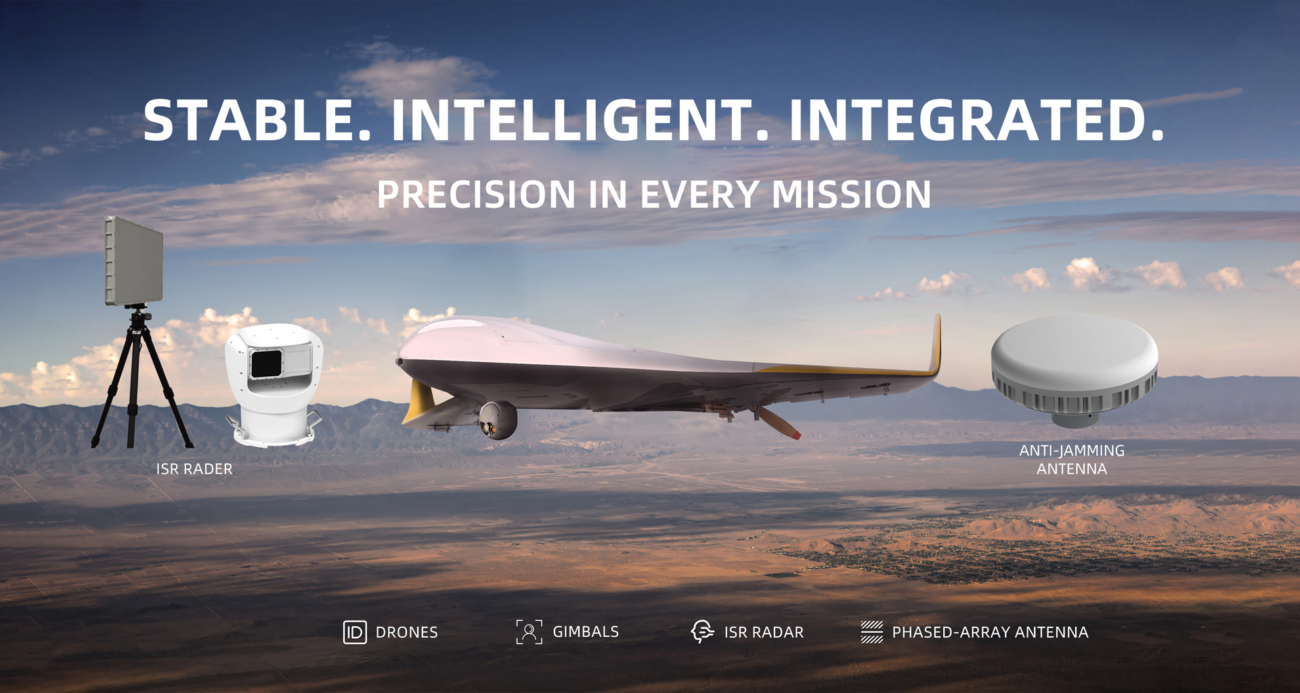
An integrated UAV operation starts with the aircraft platform and its propulsion system. Once the platform is deployed, onboard systems support flight while configured payloads and sensors perform their intended functions. Gimbals can stabilize compatible equipment, while radar and other sensing technologies can provide additional information depending on the platform configuration.
The resulting data can be transferred through suitable data-link and communication systems. Supporting equipment can then receive and manage the information according to the system architecture. This process demonstrates why the different components of an unmanned platform need to be considered as interconnected technologies rather than independent accessories.
Important Features of a Full-Stack UAV Solution
Complete Platform Capabilities
A complete UAV platform provides the foundation for integrating propulsion, payloads, sensors, and communications. This allows the aircraft architecture to be considered according to the requirements of a particular application.
Integrated Communication
Reliable communication and data links are essential for exchanging information between airborne and supporting systems. Their integration into the overall UAV architecture can help create a more connected operating environment.
Advanced Payload Support
Gimbals, radar, and sensing equipment can expand the capabilities of an unmanned aircraft beyond basic flight. The ability to integrate these technologies provides additional flexibility when developing specialized platforms.
Why Explore ChinaMoneypro UAV?
Organizations researching advanced UAV technology may require a partner capable of addressing multiple elements of an unmanned system. ChinaMoneypro UAV provides a broad portfolio spanning UAV platforms, engines, gimbals, radar, data links, and communication technologies.
This full-stack capability allows developers and potential partners to look at UAV development from a complete-system perspective. Rather than concentrating on only one component, they can consider the relationship between flight, sensing, payload integration, and communication when evaluating possible solutions.
The company's position within one of China's major innovation hubs also provides an environment suited to technology development and engineering activities. Combined with its research background, this supports continued exploration of advanced unmanned platform technologies.
Potential Applications for Unmanned Platforms
Modern UAVs can be adapted for many applications, depending on their design and equipment. Potential areas include surveying, mapping, infrastructure inspection, aerial observation, environmental monitoring, research, and data collection.
Each application can require a different combination of aircraft characteristics and supporting technologies. Payload requirements, communication capabilities, sensing objectives, flight conditions, and data-transfer needs can all influence the configuration of the final platform.
Building a More Connected UAV Future
The continued evolution of unmanned aviation is closely linked to integration. An advanced UAV needs more than a capable aircraft platform; it requires technologies that work together across propulsion, sensing, stabilization, radar, data transmission, and communication.
A full-stack development model provides a way to approach these requirements through a broader engineering perspective. With experience across multiple UAV technology categories, Moneypro is positioned to support organizations exploring sophisticated unmanned platform concepts and integrated sensing-communication solutions.
Discover the Next Generation of Unmanned Technology
As UAV applications continue to expand, integrated technology will remain central to the development of capable aerial platforms. Combining aircraft systems with engines, gimbals, radar, data links, sensing technologies, and communications creates a foundation for more specialized and connected unmanned solutions.
For organizations seeking to explore advanced UAV systems, ChinaMoneypro UAV offers a comprehensive technology portfolio backed by research heritage and engineering capabilities. Visit the official website to learn more about its platforms and integrated technologies and explore the possibilities of next-generation unmanned aviation.